 by Angie10 » 16 Mar 2025, 14:41
Starlink may have been the first to dominate space-based broadband, but the race isn’t over yet.
For people in remote areas, satellite internet has been a game changer, bringing fast connections where traditional broadband can’t reach. Starlink has led the charge, but China is moving in. A new satellite internet project called SpaceSail, backed by the Shanghai government and Chinese Academy of Sciences, is gearing up to challenge Starlink. And it’s scaling up fast. SpaceSail launched its first 18 satellites in August 2024. By early 2025, it had 72. The company plans to hit 648 by year’s end, then double that to 1,296. By 2030, it wants 15,000 satellites in orbit.
Africa, a prime market for satellite internet, has also been a challenge. Starlink is live in only 14 countries despite plans for many more. China sees the gap—and an opportunity.
The global satellite internet market is still young, but competition is heating up. Amazon’s Project Kuiper, the UK’s OneWeb, and Europe’s IRIS² are also all building LEO constellations, though none have matched Starlink’s scale. If SpaceSail delivers, it could become the first serious non-Western challenger.
The real test, however, will be securing international markets. Starlink may have the head start, but this race is far from over.For the complete article:
https://rb.gy/6pons6Image credit: Christoph Meinersmann
@Pixabay
[b][size=150]Starlink may have been the first to dominate space-based broadband, but the race isn’t over yet.
For people in remote areas, satellite internet has been a game changer, bringing fast connections where traditional broadband can’t reach. Starlink has led the charge, but China is moving in. A new satellite internet project called SpaceSail, backed by the Shanghai government and Chinese Academy of Sciences, is gearing up to challenge Starlink. [/size][/b]
And it’s scaling up fast. SpaceSail launched its first 18 satellites in August 2024. By early 2025, it had 72. The company plans to hit 648 by year’s end, then double that to 1,296. By 2030, it wants 15,000 satellites in orbit.
Africa, a prime market for satellite internet, has also been a challenge. Starlink is live in only 14 countries despite plans for many more. China sees the gap—and an opportunity.
[b][size=150]The global satellite internet market is still young, but competition is heating up. Amazon’s Project Kuiper, the UK’s OneWeb, and Europe’s IRIS² are also all building LEO constellations, though none have matched Starlink’s scale. If SpaceSail delivers, it could become the first serious non-Western challenger.
The real test, however, will be securing international markets. Starlink may have the head start, but this race is far from over.[/size][/b]
For the complete article: https://rb.gy/6pons6
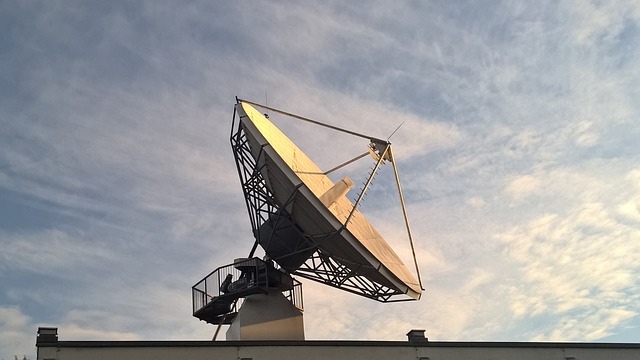
Image credit: Christoph Meinersmann
@Pixabay
- Attachments
-
- satellite-dish-2801490_640.jpg (51.2 KiB) Viewed 352 times





